
WISDOM TEETH EXTRACTIONS
Wisdom teeth are the last to arrive and, unfortunately, often the very first to cause trouble. If your wisdom teeth are causing pain or pushing your other nicely aligned teeth out of place, our surgical experts ensure a swift, painless removal.
Here is everything you need to know about wisdom teeth extraction.
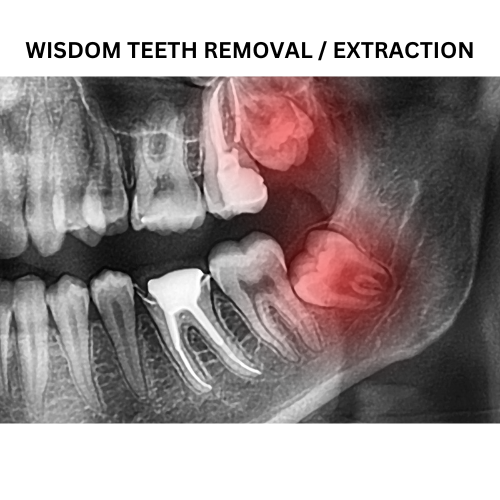
What is a Wisdom Tooth Extraction?
It is a standard oral surgery procedure to safely remove the third molars (the wisdom teeth) located at the very back corners of your mouth.
- Simple Extraction: Removing a wisdom tooth that has fully erupted clearly through the gums.
- Surgical Extraction: Removing a tooth that is “impacted”—meaning it is stuck partially or completely beneath the gumline or jawbone.
When is an Extraction Needed?
Wisdom teeth are notoriously problematic due to a lack of space in the modern human jaw. Removal is highly recommended for:
- Impaction: The tooth is actively growing in sideways, pushing against and damaging adjacent healthy roots.
- Pericoronitis: Painful, recurring bacterial infections in the gum flap that traps food over a partially erupted tooth.
- Severe Crowding: The erupting tooth is exerting pressure and ruining years of expensive orthodontic work.
- Deep Decay: Because they are so far back, they are incredibly hard to brush, making them highly susceptible to deep cavities.
The Procedure: Step-by-Step
We keep the surgical process smooth and comfortable. It typically happens in three main stages:
- Deep Anesthesia: We ensure the area is profoundly numbed. You will feel some pressure and pushing, but absolutely no sharp pain.
- Careful Removal: For impacted teeth, the surgeon may gently divide the tooth into smaller sections to remove it safely without damaging surrounding bone.
- Suturing: The site is cleaned, and comfortable, dissolvable stitches are usually placed to aid in fast healing.
Life After the Procedure: Post-Op Care
Proper aftercare is the absolute secret to a fast recovery! To ensure the best results:
- Ice is your Friend: Apply an ice pack to the outside of your cheek intermittently for the first 24 hours to drastically minimize swelling.
- Dietary Shift: Strictly eat cold, soft foods like yogurt, smoothies, and mashed potatoes for the first few days.
- Protect the Clot: Do NOT spit forcefully, do NOT smoke, and absolutely do NOT use a straw for at least 3 days. Suction can ruin the healing process.
Safety and Success (Managing Complications)
Wisdom tooth removal is an incredibly routine surgery. While complications are rare, staying proactive is key:
- Normal Swelling: You may look like a “chipmunk” for a few days. This is a completely normal inflammatory healing response.
- Dry Socket: This painful condition occurs if the protective blood clot is dislodged prematurely. Following our strict “no straws, no smoking” rule practically eliminates this risk!
- Mild Bleeding: Slight pink oozing in your saliva is normal for the first 24 hours. Biting firmly on clean gauze resolves it quickly.
Why Choose Fabudent Dental Clinic?
At Fabudent, we don’t just “pull teeth”—we prioritize your profound comfort and safety. Here is how we take care of you:
- Specialist Surgeons: Complex, deep impactions are handled strictly by our highly trained Oral & Maxillofacial Surgeons, not general dentists.
- Advanced Imaging: We utilize specialized 3D scans to exactly map the position of the tooth’s roots in relation to your major facial nerves to guarantee surgical safety.
- Calm Environment: We know surgery sounds intimidating. We walk you through every single step to alleviate your anxiety before we begin.
Frequently Asked Questions
Do all wisdom teeth need to be removed?
Not necessarily! If they grow in perfectly straight, are healthy, and you have enough room in your jaw to brush them properly, they can stay. We evaluate this on a case-by-case basis.Will I be asleep for the procedure?
Most extractions are done easily under powerful local anesthesia while you are awake but numb. However, for highly complex cases or extremely anxious patients, sedation options can be discussed.