
CHILD’S FIRST DENTAL VISIT
Establishing a remarkably strong foundation for lifelong oral health begins in infancy. Ensuring a fun, positive, and entirely stress-free initial dental experience is critical for preventing future dental anxiety and establishing cooperative, healthy behavioral habits!
Here is everything you need to know to prepare your little one for the big day.
What is the First Visit?
It is an introductory, highly gentle clinical evaluation of your child’s emerging oral structures.
- The Goal: To normalize the clinical environment for the child so they view the dentist as a friendly helper, not a scary doctor.
- The Assessment: Evaluating jaw development, checking for early demineralization, and ensuring teeth are erupting on schedule.
- The Education: Providing parents with vital, tailored advice on proper infant diet and hygiene.
When is the Visit Needed?
Early intervention is the absolute key to cavity prevention:
- The Golden Rule: The globally recognized pediatric standard recommends scheduling a child’s first evaluation by their first birthday, or within six months of the eruption of their very first primary tooth.
- Addressing Habits: If you notice prolonged thumb-sucking or pacifier use, an early visit helps intercept these habits before they permanently alter jaw growth.
The Procedure: Step-by-Step Preparation
We keep the clinical examination incredibly simple and fast. It typically happens in three main stages:
- Familiarization at Home: Play “dentist” at home in a relaxed setting. Have your child comfortably recline on the couch while you playfully count their teeth using a small flashlight.
- The Knee-to-Knee Exam: In the clinic, we frequently utilize a “knee-to-knee” positioning technique for infants. The child remains securely and safely cradled in the parent’s lap while we gently evaluate their teeth.
- Preventive Action: After a quick visual count and assessment, the specialist may apply a rapid, pleasant-tasting fluoride varnish to fortify the new enamel.
Life After the Visit: Post-Op Care at Home
The real clinical work happens in your bathroom! To ensure the best results:
- Keep it Positive: Never, ever utilize negative or fear-inducing terminology regarding dental visits (e.g., “If you don’t brush, the dentist will give you a needle!”).
- Supervise Brushing: Ensure you are physically brushing your toddler’s teeth twice a day with a tiny smear of child-safe toothpaste.
- Avoid Night Bottles: Never let a baby fall asleep with a bottle of milk or juice; the pooling sugars cause rapid, devastating “bottle decay.”
Safety and Success (Managing Complications)
The first visit is entirely non-invasive, meaning physical complications are non-existent. The focus is purely on managing behavioral challenges:
- Normal Crying: It is completely developmentally normal for an infant or toddler to cry during the exam. They are not in pain; they are simply reacting to a new environment and having a stranger look in their mouth!
- Building Tolerance: The crying usually subsides by the second or third visit as the child realizes the environment is entirely safe and harmless.
Why Choose Fabudent Dental Clinic?
At Fabudent, we are deeply passionate about setting children up for a lifetime of success. Here is how we take care of your family:
- Specialized Pedodontist: Our clinical team is spearheaded by a specialist rigorously trained in child psychology and compassionate behavioral management.
- The “Tell-Show-Do” Method: We introduce potentially intimidating clinical instruments in a fun, non-threatening, child-centric manner before usage, successfully fostering a highly trusting environment.
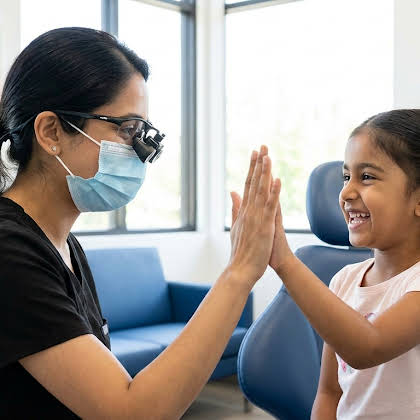
- The Reward: Every successful visit concludes with enthusiastic high-fives, praise, and small rewards to reinforce that the clinic is a wonderful place to be!
Frequently Asked Questions
Should I read books to my child about the dentist?
Absolutely! Reading cheerful, beautifully illustrated books or watching positive cartoons about characters visiting the dentist can significantly reduce anticipatory anxiety before the appointment.What if my toddler refuses to open their mouth?
Do not worry! Our Pedodontist employs a variety of highly effective, gentle distraction techniques and games to coax even the most stubborn toddlers into opening wide.